
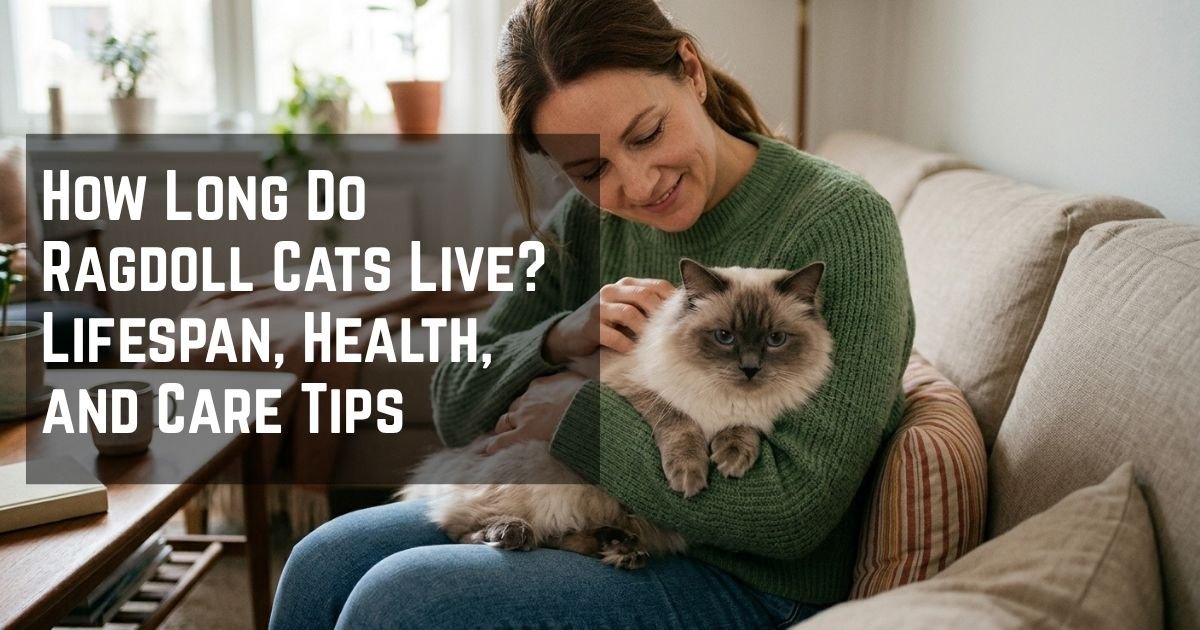
Ragdoll cats typically live 12 to 17 years, with many healthy, indoor-only Ragdolls reaching the upper end of that range or beyond. Genetics, weight management, and preventive vet care all play a role, but the single biggest lever an owner has is keeping the cat indoors and choosing a kitten from parents that were actually health-tested.
What Affects a Ragdoll’s Lifespan
Indoor living is the clearest factor. Ragdolls kept exclusively indoors avoid the trauma, infectious disease, and predator risk that shorten outdoor cats’ lives across every breed, and it’s a big part of why well-cared-for Ragdolls often land toward 15 to 17 years rather than the lower end of the range. Weight also matters more than owners expect: Ragdolls are a calm, food-motivated breed, and excess weight adds strain on the heart and joints that compounds over a long lifespan.
Genetics is the piece an owner has the least control over after the kitten comes home, which is why it matters so much at the point of purchase. The two inherited conditions most relevant to Ragdolls are hypertrophic cardiomyopathy and polycystic kidney disease.
Hypertrophic Cardiomyopathy (HCM)
HCM is a thickening of the heart muscle that reduces the heart’s ability to pump blood efficiently, and it’s the most significant breed-specific health concern in Ragdolls, caused by a mutation in the MYBPC3 gene identified by UC Davis’s Veterinary Genetics Laboratory. Some studies estimate that roughly a quarter to a third of Ragdolls carry risk factors associated with the condition, though DNA testing has meaningfully reduced how often the most common cause shows up in tested breeding lines. HCM can be asymptomatic for years before signs appear, which is exactly why breeding-cat testing matters more than waiting for symptoms in an individual cat. A DNA test combined with a cardiac echocardiogram on both parents is the standard a genuinely health-testing breeder should be able to show you.
Polycystic Kidney Disease (PKD)
PKD causes fluid-filled cysts to form on the kidneys, starting in kittenhood and gradually growing as the cat ages. It’s more strongly associated with Persians, but Ragdolls are considered a risk breed too, since some Ragdoll lines carry Persian ancestry further back in their pedigree. PKD often doesn’t cause noticeable problems until later in life, sometimes not until a cat is seven to ten years old, which makes genetic testing at the breeding stage far more useful than trying to catch it early through symptoms alone in a young kitten.
Life Stages: What to Expect as Your Ragdoll Ages
Ragdolls develop and age slowly compared to many breeds, which lines up with their unusually long typical lifespan:
- Kitten (0–1 year): Rapid growth, though full size isn’t reached until much later
- Junior (1–2 years): Physically mature-looking but still filling out
- Adult (3–6 years): Full size reached around age three to four, prime health years
- Mature (7–10 years): Routine bloodwork and cardiac monitoring become more important
- Senior (10+ years): Twice-yearly vet visits, closer attention to weight and mobility
Why the Breeder You Choose Affects Lifespan
Registration paperwork confirms pedigree, not health. A cattery can be fully registered and still not test breeding cats for HCM or PKD, which means the genetic risk gets passed down regardless of how legitimate the paperwork looks. When you’re vetting a cattery, ask directly for the parents’ HCM DNA results and a recent echocardiogram, not just a general assurance that the cats are “healthy.” A properly health-tested breeder should have no hesitation sharing that documentation, and it’s worth reading through what makes a reputable breeder before you commit to a deposit.
Diet plays a supporting role too, particularly around weight management as your Ragdoll ages into its mature and senior years. A feeding approach built around your cat’s actual life stage, rather than a one-size-fits-all bag of food, is covered in more detail in our Ragdoll diet and feeding guide.
Frequently Asked Questions
What is the average lifespan of a Ragdoll cat?
Most Ragdolls live 12 to 17 years, with indoor cats from health-tested lines often reaching the higher end of that range.
What is the most common health issue in Ragdolls?
Hypertrophic cardiomyopathy (HCM) is the most significant breed-specific concern, followed by polycystic kidney disease (PKD) at a lower but still notable rate.
Do indoor Ragdolls really live longer than outdoor ones?
Yes. Removing exposure to traffic, predators, and infectious disease is one of the most reliable ways to extend any cat’s lifespan, and it’s especially relevant for a breed as trusting and low-defensive as the Ragdoll.