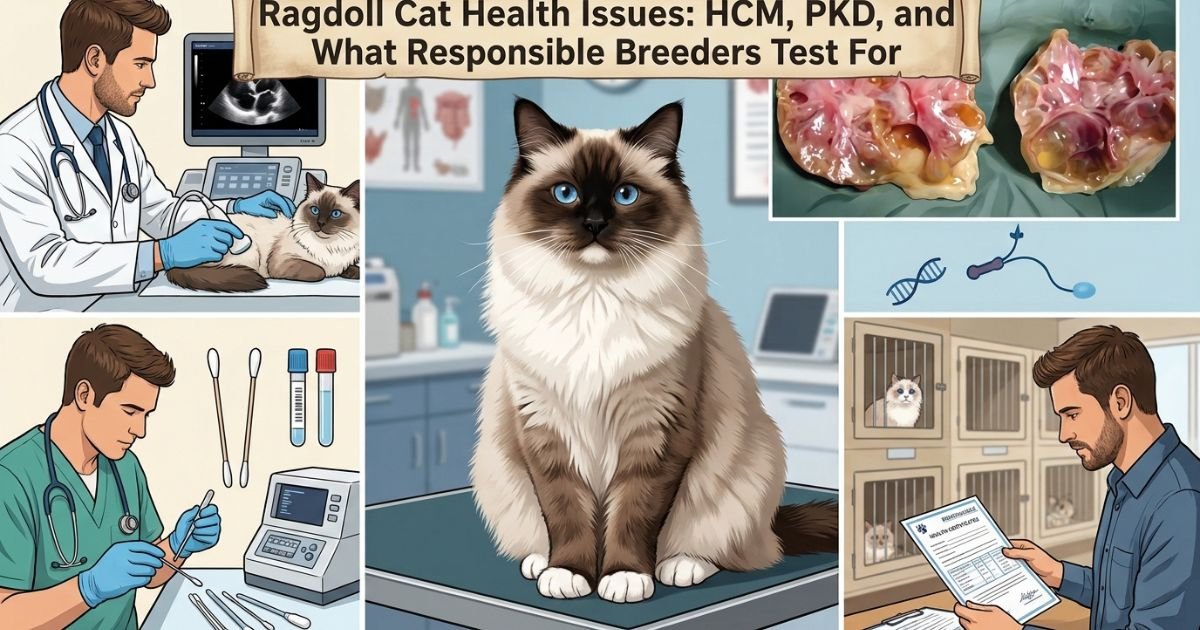
The two health concerns most associated with Ragdolls are hypertrophic cardiomyopathy (HCM) and polycystic kidney disease (PKD), both inherited conditions that reputable breeders test for before breeding. But the largest real-world study of Ragdoll health records, a 2025 UK veterinary cohort of over 2,000 cats, actually found dental disease, digestive upset, and obesity to be the most commonly recorded issues day to day. Both pictures matter: HCM and PKD are the rarer, more serious genetic risks worth screening for at the breeder level, while dental care, diet, and weight management are the more common concerns you’ll actually manage as an owner.
Hypertrophic Cardiomyopathy (HCM)
HCM is a thickening of the heart muscle that makes it harder for the heart to pump blood effectively, and it’s the most significant breed-specific health concern in Ragdolls. Researchers identified the genetic cause in Ragdolls as a specific mutation in the MYBPC3 gene, known as R820W, distinct from the mutation found in Maine Coons, according to UC Davis’s Veterinary Genetics Laboratory.
The risk isn’t uniform across all carriers. Cats with one copy of the mutation (heterozygous) often show no signs and can live a normal lifespan, while cats with two copies (homozygous) are at significantly higher risk of developing severe HCM, sometimes as early as one to two years old. This is exactly why DNA testing at the breeding level matters more than waiting to see symptoms in an individual kitten: breeding two heterozygous carriers together can still produce homozygous, high-risk kittens roughly a quarter of the time. Responsible breeders test both parents and pair a carrier only with a cat that tests clear, avoiding homozygous combinations entirely. A cardiac echocardiogram alongside the DNA test gives a more complete picture, since HCM can develop by mechanisms outside the known genetic mutation as well.
Polycystic Kidney Disease (PKD)
PKD causes fluid-filled cysts to form on the kidneys, beginning in kittenhood and gradually enlarging as the cat ages, which can eventually impair kidney function. It’s most strongly associated with Persians, but Ragdolls are considered a risk breed too, likely reflecting shared ancestry further back in some pedigree lines. A DNA test can identify carriers before symptoms ever appear, which matters since PKD often doesn’t cause noticeable problems until a cat is well into adulthood.
Bladder Stones and Urinary Issues
This is a real but less commonly discussed risk: veterinary research from the Royal Veterinary College has identified Ragdolls, along with Persians, Burmese, and Tonkinese, as being at increased risk of urinary tract stones compared to non-purebred cats. Struvite and calcium oxalate are the two most common stone types found in cats generally, and both can cause a painful, potentially life-threatening blockage, especially in males, whose narrower urethra makes obstruction more likely. Wet food, consistent hydration, and regular urinalysis are the main tools for managing this risk day to day.
What the Real-World Data Actually Shows
A large 2025 study tracking primary veterinary records for over 2,000 Ragdolls in the UK, published via the RVC’s VetCompass Programme, found that the most frequently recorded individual conditions were periodontal disease, diarrhea, and obesity, not HCM or PKD. That doesn’t make the genetic conditions less important to screen for, they’re rarer but far more serious when they occur, but it does mean day-to-day Ragdoll ownership is realistically more about dental care, digestive sensitivity, and weight management than it is about the conditions that get the most attention in breed write-ups.
What Responsible Breeders Test For
Registration paperwork alone doesn’t confirm any of this. A cat can be fully TICA or CFA registered without either parent having been screened for HCM or PKD. When evaluating a breeder, ask specifically for the parents’ HCM DNA results and a recent cardiac echocardiogram, along with PKD testing status. It’s worth reading through what makes a reputable breeder for the fuller picture of what to verify before placing a deposit, and pairing that with an understanding of typical Ragdoll lifespan and life stages gives a more complete sense of what you’re committing to.
This article provides general information and isn’t a substitute for veterinary advice. Always consult a licensed veterinarian about your cat’s individual health.
Frequently Asked Questions
What is the most serious health issue in Ragdolls?
Hypertrophic cardiomyopathy (HCM) is the most serious genetic concern due to its potential severity, though it’s less commonly recorded overall than issues like dental disease and obesity.
Can HCM be detected before symptoms appear?
Yes. A combination of DNA testing and a cardiac echocardiogram can identify risk in breeding cats, which is why testing parents matters more than waiting for symptoms in an individual kitten.
Are all Ragdolls at risk for PKD?
Not all, but Ragdolls are considered a risk breed alongside Persians. DNA testing can identify carriers regardless of visible symptoms.