TICA-Registered Cattery
Purchase White Color Ragdoll Kittens
Snow-bright, blue-eyed Ragdoll kittens in blue point, lilac point, and high-white van coloring, every one health-tested and TICA-registered through our network of ethical US breeders. Scroll down to meet the current litter, or send a quick inquiry to hold your favorite fluffball.
🏅 TICA-registered cattery
❤️ HCM tested kittens
📋Health guarantee included
🤝 Reputable breeder network
Now Available
Available White Color Ragdoll Kittens
Litters ready 12-16 weeks. Submit an inquiry for current availability by color and location.
Why buyers choose us
Why buyers choose our Ragdoll kittens
Every kitten is TICA-registered and comes from parents screened for HCM via annual cardiac ultrasound. Kittens go home with a written health guarantee, first vaccinations, and a vet health certificate.If a covered condition is diagnosed within the guarantee period, we work directly with the family on a replacement kitten or refund per the written agreement — details are provided before any inquiry is confirmed.
Purchase a Pale-Coated Ragdoll Kitten From a Trusted Breeder
Bringing home a pale-coated Ragdoll through us means working with an actual community of caring, TICA-registered breeders, real people who know their cats by name, not a middleman shuffling kittens between strangers. Every breeding pair behind these blue and lilac lines has been DNA and HCM screened, so the genes that give you that snow-kissed coat aren’t carrying the heart trouble the breed is prone to. These kittens grow up tumbling around a living room, not tucked away in a cage, handled and cuddled daily from birth, which is exactly why they turn into such easygoing, people-loving cats.
Whether you’ve been hunting for a blue eyed white Ragdoll kitten, a lilac point, or the closest thing the breed offers to a pure white one, every listing on this page leaves home fully vaccinated for its age and backed by a written guarantee.
What Is a White Ragdoll Kitten?
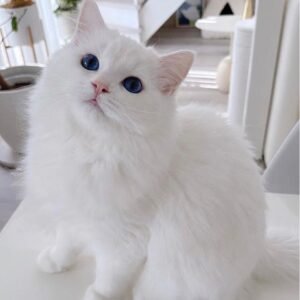
No registry hands out a color card that literally says “white,” but any cat lover typing that search knows exactly the look they’re after: a pale, almost ghostly coat with just a whisper of color on the face, ears, legs, and tail, and those unmistakable sapphire-blue eyes staring back at you. Two paths get you there: blue or lilac coloring, often paired with a high-white pattern.
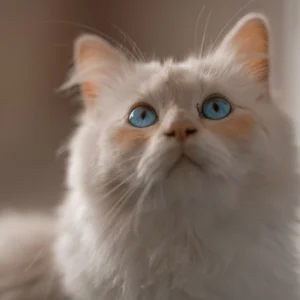
Blue gives soft slate-grey points against a body so light it reads almost white in most lighting, and it’s the color most buyers picture first. Lilac is the palest color in the Ragdoll palette, a faint frosty pink-grey, and it’s genuinely uncommon since a kitten only turns up lilac when both parents carry the gene. Add a van pattern, where color is limited to just the ears and tail, and you get about as close to a pure white Ragdoll kitten as the breed standard allows.
Blue and Lilac Ragdoll Colors and Patterns Explained
Color and pattern tell two different stories on a coat. Color is the shade of the points; pattern is where that color, and any white, actually lands. TICA recognizes colorpoint, mitted, and bicolor as the breed’s primary patterns, and van-style bicolor is usually what people mean when they picture a nearly all-white kitten.
- Blue Point: cool, slate-grey points against a body so pale it can look snow-white from across the room, the color most people land on first
- Lilac Point: a faint, frosty pinkish-grey on the points against an almost pure-white body, the palest, softest color the breed offers, and one of the harder ones to find
- Blue Mitted: cool slate-grey points paired with crisp white “mittens” on all four paws, adding an extra dose of snowy contrast
- Lilac Mitted: the breed’s palest color combined with the classic white-mitted paws
- Blue & Lilac Bicolor: generous white markings, including the signature inverted “V” on the face, layered over blue- or lilac-toned points
- Blue & Lilac Van: the most white of any pattern, color limited mostly to the ears and tail, leaving the rest of the coat essentially white
All of these carry the same plush, silky fur and the breed’s signature blue eyes; the pattern only changes how much white shows up on the body.
What Is the Personality of a White Ragdoll Cat?
The pale coat is what gets most buyers to this page, but it’s rarely what keeps them coming back for a second kitten. Owners of our white-toned kittens tend to describe the same traits:
- Wonderfully mellow: happy to nap the afternoon away without needing constant entertainment
- Total velcro cats: go limp and floppy in your arms, then pad after you room to room just to stay close
- Gentle with little hands: a slow-to-startle nature means fewer surprised scratches around curious toddlers
- Easygoing around dogs: most settle into a household with a resident pup within a couple of weeks
- Perfectly happy in apartments: no yard needed, a cozy windowsill and your lap are enough
- Kind to first-time cat parents: readable, affectionate, and about as low-drama as a cat gets
If what you’re after is a devoted lap warmer rather than a whirlwind of energy, a light-coated Ragdoll is about as gentle a landing as this breed offers.
Physical Characteristics of a White Ragdoll Kitten
1. Face and Eyes
The eyes are the centerpiece: large, oval, and set wide apart, deepening to a rich sapphire blue as the kitten matures. Against a pale blue or lilac coat, that blue-eyed white Ragdoll kitten look is about as striking as the breed gets.
2. Body and Coat
Expect a semi-long, silky coat with minimal undercoat over a solidly built, rectangular body. The body stays a very pale, almost-white shade while the points carry a soft slate-grey (blue) or frosty pink-grey (lilac) tone.
3. Tail and Paws
The tail carries the most visible color of the coat. On mitted, bicolor, and van kittens, white spreads further across the paws, legs, and face, which is why van-patterned kittens read as the closest thing to a pure white Ragdoll kitten in the breed.
4 Reasons Why Families Choose White Ragdoll Kittens
The pale coat is what gets buyers to this page. Here’s what actually seals the decision once they meet a litter.
- A coat you won’t see in every litter: blue and lilac points, especially the near-white van pattern, turn up less often than the breed’s darker colors, so you end up with a kitten that looks genuinely different from the average Ragdoll
- Sapphire eyes at their most striking: those trademark blue eyes stand out on any Ragdoll, but against a pale coat they’re the first thing anyone notices
- The same gentle, velcro-cat temperament: coat color has no bearing on personality, a blue point or lilac van kitten goes just as limp in your arms and follows you room to room as any other color in the breed
- No compromise on health: rarer coloring doesn’t mean lighter screening, every kitten here comes from HCM- and DNA-tested parents and leaves with the same written guarantee
Ragdoll Kitten Pricing by Color
Pricing on this page runs $1,200 to $2,200, and color rarity is the biggest lever within that range. Pet-quality blue point kittens sit at the lower end since breeders can produce them predictably in most litters. Lilac point and van-patterned kittens climb toward the top of the range since they turn up less often and take more careful pairing to breed for on purpose.
1. Blue Point and Blue Mitted
The most common white-toned patterns, typically priced from $1,200 to $1,600. You’re paying for the color and the standard package: health testing, vaccinations, and a written guarantee.
2. Lilac Point and Van Patterns
Expect $1,500 to $2,200 for these. Lilac only shows up when both parents carry the gene, and van patterning needs specific white-spotting genetics, so a breeder can’t guarantee either in every litter.
3. What Else Moves the Price
Beyond color, price reflects the breeder’s location, the parents’ health-testing history, and how close the kitten is to a full vaccination schedule at pickup. A kitten priced noticeably below this range from an unfamiliar seller is worth extra scrutiny, not necessarily a bargain.
Blue, Lilac, and Van: How Rare Are They?
Not in the traditional sense. The breed standard is built around pointed coloring, so a completely solid white cat with no color anywhere isn’t a standard-recognized Ragdoll. The closest you’ll get is a van-patterned blue or lilac point, where color sits only on the ears and tail and the rest of the body looks almost entirely white.
1. Common: Blue Point and Blue Mitted
These two make up most white-toned litters. Breeders can produce them consistently, which is exactly why they sit at the lower end of the price range above.
2. Less Predictable: Lilac and Van
Lilac is tied to a recessive dilution gene both parents must carry, and van needs a specific white-spotting gene layered on top. Neither is truly rare breed-wide, they’re just harder to guarantee in any single litter.
3. Rare Does Not Mean Better
A harder-to-produce color costs more because of supply, not because it’s healthier or higher quality. A well-tested blue point kitten is every bit as sound as a lilac van littermate.
Are White Ragdoll Kittens Always Deaf ?
No, and this is worth clearing up, since it’s the question we get asked most about pale-coated kittens. The deafness commonly associated with white, blue-eyed cats comes from the dominant white (W) gene, which masks all coat color entirely and can disrupt hearing development.
A Different Gene Entirely
Standard Ragdolls, including every blue point, lilac point, mitted, bicolor, and van kitten on this page, get their pale coats and blue eyes from the colorpoint (temperature-sensitive) gene, the same gene Siamese cats carry. Research on colorpoint breeds has found no elevated deafness risk tied to this gene.
Where the Risk Actually Applies
The deafness link becomes relevant only with a separate, non-standard “Blue-Eyed White” (BEW) Ragdoll line, produced through outcrossing and carrying the true dominant white masking gene. Even there, responsible breeders reduce the risk through careful pairing and BAER hearing testing. Every kitten we place is a standard colorpoint pattern, not a BEW line.
Lifespan and Health Considerations
Coat color has no bearing on lifespan. A well cared for Ragdoll, blue point, lilac point, or van pattern included, typically lives 12 to 17 years indoors, with plenty reaching their late teens under the right conditions.
1. Genetics and Heart Health
Ragdolls as a breed carry a higher risk of HCM, a thickening of the heart muscle. Kittens from parents who clear annual cardiac ultrasounds start life with meaningfully better odds than kittens from unscreened lines.
2. Diet and Weight
Ragdolls are a large breed prone to packing on extra weight, and excess weight adds strain on the same heart that HCM already puts at risk. A measured, age-appropriate diet does more for lifespan than almost anything else an owner controls directly.
3. Indoor Living
Ragdolls are famously trusting and not especially street-smart, which makes them poor candidates for unsupervised outdoor time. Keeping your cat indoors, paired with routine vet visits, is one of the simplest ways to protect a long lifespan.
Caring for Your Kitten
Coat color does not change day-to-day care. A few basics keep any Ragdoll kitten thriving:
- Feed a high-quality, age-appropriate diet to support healthy growth
- Brush the coat weekly to prevent mats and keep it silky
- Wipe eyes and ears gently as needed and keep nails trimmed
- Provide scratching posts, toys, and cozy resting spots to keep your kitten engaged
- Socialize daily, especially in the first few months, to build a confident, affectionate adult cat
- Keep up with scheduled vet visits throughout your kitten’s life, not just at pickup.
Our Health Promise, Every Kitten
Every pale-coated kitten on this page comes from parents who cleared the same health screening before ever being paired.
- DNA testing: parent cats are screened for HCM and PKD before any breeding is planned
- HCM cardiac screening: breeding cats undergo annual echocardiograms, not a single early-life DNA panel
- Age-appropriate vaccinations: kittens leave current on their full vaccination schedule
- Deworming: completed on schedule ahead of pickup
- Veterinary health checks: a licensed vet examines every kitten and issues a health certificate before departure
- Microchipping: permanent ID registered in your name at handoff
- Written health guarantee: covers genetic conditions for a defined window after purchase, with full terms shared before you reserve
How to Reserve
How to Reserve Your White Ragdoll Kitten
- Pick your pattern: browse the available kittens above, from blue point to lilac point, mitted, bicolor, and van
- Submit an inquiry: tap “Get Quote,” note the kitten’s name, and add your contact and location details
- Get a fast reply: a breeder from our network typically responds within 24 hours with pricing and availability
- Secure a deposit: use the payment link your breeder sends to hold your kitten
- Arrange handoff: collect in person or arrange safe delivery nationwide
- Stay supported: your breeder remains available for questions well beyond pickup day
Common Questions
White Ragdoll Kitten FAQ
How much are white Ragdoll cats?
Pricing depends on color rarity more than anything else. Pet-quality blue point kittens usually run $1,200–$1,800. Lilac point and van-patterned kittens, being scarcer since both parents need to carry the recessive gene, tend to run higher, often $1,500–$2,200.
Is there a pure white Ragdoll?
Not in the traditional sense. The breed standard is built around pointed coloring, so a completely solid white cat isn’t a standard-recognized Ragdoll. The closest you’ll get is a van-patterned blue or lilac point, where color sits only on the ears and tail. A separate, non-standard “Blue-Eyed White” line exists through outcrossing, which is a different conversation health-wise.
What's the difference between blue and lilac Ragdolls?
Blue points wear a cooler, slate-grey shade, while lilac points are noticeably paler — a soft, frosty pinkish-grey. Lilac only shows up when both parents carry the gene, which is why it’s rarer.
Are white Ragdoll kittens born already pale?
Pretty much — Ragdoll kittens are born nearly all white regardless of eventual color, so blue and lilac points actually start out looking the palest of any Ragdoll litter. Their true coloring fills in gradually over the first one to two years.
How long do white Ragdolls live?
Coat color doesn’t affect lifespan. Ragdolls generally live 12–17 years with good nutrition, indoor living, and regular veterinary care including cardiac screening for HCM. A blue point, lilac point, or van-patterned cat has the same life expectancy as any other color in the breed.
Do white Ragdolls have the same striking blue eyes?
Yes — deep blue eyes are a breed standard across every pointed Ragdoll color, and they tend to stand out even more against a pale coat.
How big will my white Ragdoll grow?
Coat color has no bearing on size — Ragdolls are a large breed across the board. Males typically settle between 15–20 lbs and females 10–15 lbs once fully grown, around 3–4 years old.
Are white Ragdoll cats always deaf?
No. The deafness linked to white, blue-eyed cats comes from the dominant white (W) gene. Standard Ragdolls, including every color on this page, get their pale coats and blue eyes from the colorpoint gene instead, the same one Siamese cats carry, which research hasn’t linked to elevated deafness risk. The W-gene risk only applies to separate, non-standard “Blue-Eyed White” Ragdoll lines.
Do some Ragdolls stay white?
All Ragdoll kittens are born almost pure white, with true color developing gradually over the first one to two years as the points darken. Blue and lilac points stay the palest of any Ragdoll color throughout that process, and van-patterned kittens, with color limited to the ears and tail, stay visually close to white for life.
Purchase Ragdoll Kittens From Other Color Collections
Not set on brown? These related collections come from the same health-tested, TICA-registered breeder network.
White Ragdoll Kittens
Looking for a lighter coat? Explore our White Ragdoll Kittens collection featuring blue-eyed companions with the same affectionate temperament and health-tested bloodlines.
Black Ragdoll Kittens
Prefer darker coat colors? Browse our Black Ragdoll Kittens collection to discover unique kittens with striking contrast and beautiful personalities.
Blue Point Ragdoll Kittens
Blue Point Ragdoll Kittens remain one of our most requested colors thanks to their soft blue-grey coats and bright blue eyes.
What to read
Popular articles about pets

Adopting vs. Buying a Ragdoll from a Breeder: Which Is Right for You?
September 25, 2026

How to Find a Reputable Ragdoll Breeder (and Avoid Scams)
September 25, 2026

How Big Do Ragdoll Cats Get? Size, Weight, and Growth Timeline
September 25, 2026