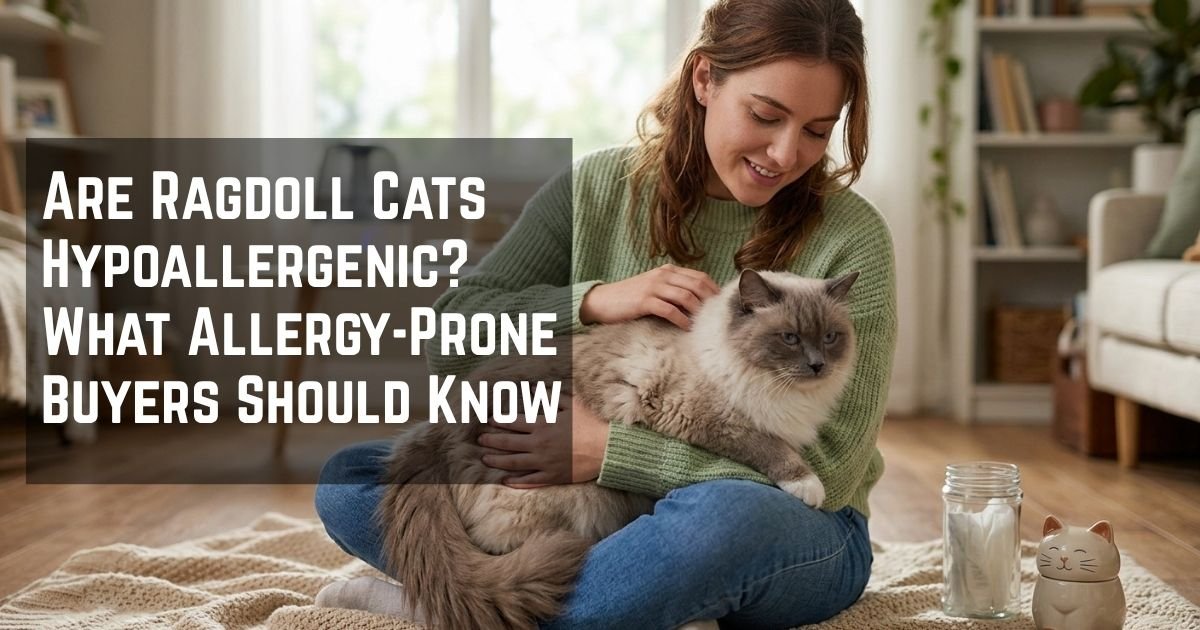
No cat is truly hypoallergenic, and that includes Ragdolls. According to research compiled by the Purina Institute, every cat produces the primary allergen responsible for most cat allergies, regardless of breed, coat length, or hair color, so a Ragdoll’s lower-shedding coat doesn’t mean it produces less allergen at the source. What it can mean is less of that allergen ending up in your home environment, which is a real but more limited benefit than “hypoallergenic” implies.
Understanding Fel d 1, the Actual Allergen
Fel d 1 is the specific protein responsible for the vast majority of cat allergic reactions, produced primarily in a cat’s salivary and sebaceous glands rather than in the fur itself. It gets transferred onto the coat during normal grooming and then spreads into the environment through shed hair and dander. Multiple studies, including research from the Purina Institute, have found that Fel d 1 production doesn’t vary meaningfully by breed, coat length, hair color, body weight, or even whether a cat lives indoors or outdoors. Genetics at the individual cat level, not the breed, drives how much a given cat produces.
Where a Ragdoll’s Coat Actually Helps
This is where the nuance matters. A Ragdoll doesn’t produce less Fel d 1 than any other cat, but its coat structure, lacking the dense undercoat found in many long-haired breeds, means it sheds less hair and less dander overall. Since Fel d 1 travels on that shed hair and dander, less shedding can translate to a somewhat lower allergen load circulating in your home, even though the cat itself isn’t making less of the allergen. It’s a distribution difference, not a production difference, and that distinction matters if you’re deciding whether a Ragdoll is a safe bet for a cat allergy.
What Actually Helps Allergy-Sensitive Households
If you’re allergy-prone and considering a Ragdoll, a few things make a bigger practical difference than the breed choice alone:
- Regular grooming reduces the amount of loose hair and dander in your home, since much of the Fel d 1 in your environment travels on that shed material.
- Frequent cleaning, especially vacuuming with a HEPA filter and washing soft furnishings, helps remove settled allergen rather than letting it accumulate.
- Keeping the cat out of the bedroom limits exposure during the hours you’re most likely to have prolonged, close contact.
- Spending time with the specific cat before committing matters more than breed reputation, since individual Fel d 1 production varies significantly even within a breed. A visit to the cattery, ideally with some direct handling, gives you a much better read on your actual reaction than any breed-level generalization.
Setting Realistic Expectations
If you have a diagnosed, moderate-to-severe cat allergy, a Ragdoll isn’t a guaranteed solution, and no breed is. For people with milder sensitivities, the combination of lower shedding, consistent grooming, and good home hygiene can make day-to-day life with a Ragdoll more manageable than with a heavier-shedding breed, but it’s a management strategy, not a cure. Beyond allergies, it’s also worth reading about Ragdoll temperament and personality to make sure the breed fits your household for reasons beyond shedding alone. Talking to an allergist about your specific sensitivity level before bringing home any cat is worth doing regardless of breed.
This article provides general information and isn’t a substitute for medical advice. If you have a diagnosed cat allergy, consult an allergist before bringing a cat into your home.
Frequently Asked Questions
Do Ragdolls produce less cat allergen than other breeds?
No. Fel d 1 production doesn’t vary by breed, coat length, or hair color. What differs is how much shed hair and dander (which carries the allergen) ends up in your environment, and Ragdolls shed less than many long-haired breeds.
Can someone with a cat allergy own a Ragdoll?
It depends on the severity of the allergy. People with mild sensitivities sometimes manage well with a lower-shedding breed combined with regular grooming and cleaning, but Ragdolls aren’t a guaranteed solution for moderate-to-severe allergies.
Is dander the same thing as the cat allergen?
Not exactly. Dander (dried skin flakes) and shed hair are two of the main ways Fel d 1, the actual allergen protein, gets distributed into your home environment.