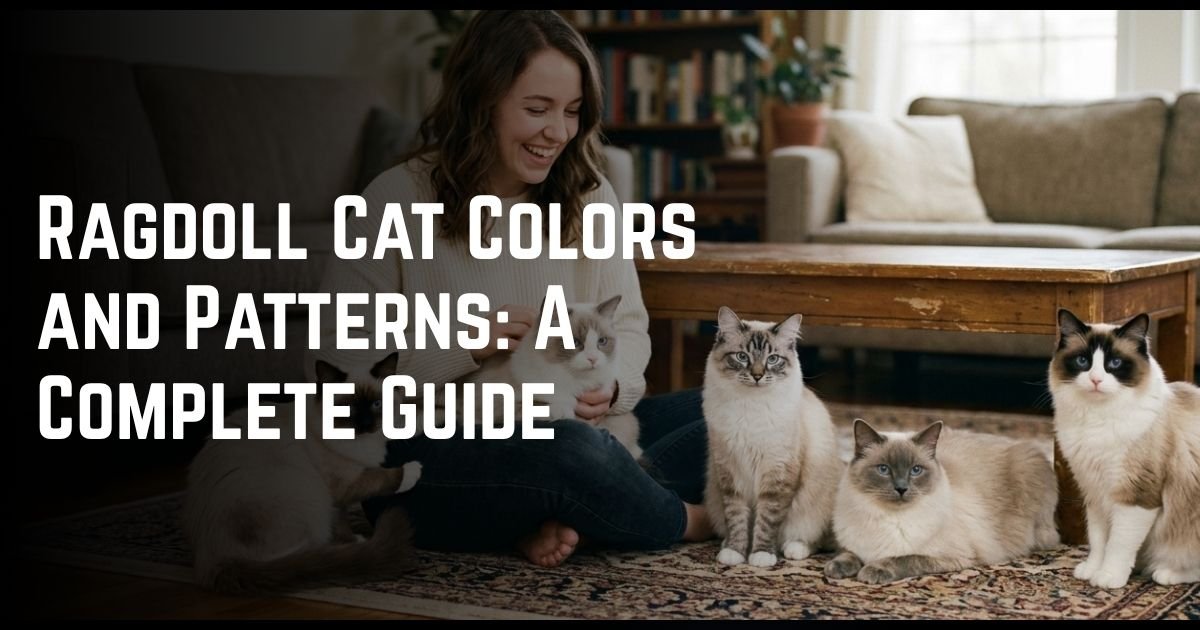
TICA and CFA recognize six Ragdoll colors (seal, blue, chocolate, lilac, red, and cream) and three patterns (colorpoint, mitted, and bicolor). Lynx is a separate overlay that adds tabby stripes to any of the six colors, not a color or pattern on its own. Every Ragdoll kitten is born white, and the true color takes up to three years to fully show.
Why Ragdoll Kittens Are Born White
A Ragdoll kitten’s color comes from a heat-sensitive pigment gene. The cooler parts of a kitten’s body (the face, ears, legs, and tail) develop color first, while the warmer body stays pale. That’s why every Ragdoll kitten looks nearly all white at birth, and why the “points” (face, ears, legs, tail) are the first place you’ll see color show up, usually within the first two weeks. The color keeps deepening and darkening as the cat grows, and it doesn’t fully settle until the cat is around three years old. A one-year-old Ragdoll and its three-year-old parent can look noticeably different in shade even though they’re the exact same color.
The 6 Ragdoll Colors
Color refers to the shade of the points, not the pattern of white on the body. Every Ragdoll, regardless of pattern, is one of these six colors.
| Color | Point Color | Rarity |
| Seal | Deep brown, almost black | Most common |
| Blue | Cool blue-gray | Common |
| Chocolate | Warm milk-chocolate brown | Uncommon |
| Lilac | Pale pinkish-gray | Rare |
| Red (Flame) | Reddish-orange | Rare |
| Cream | Pale creamy tan | Rare |
Seal
Seal is the classic Ragdoll color and the one most people picture first. The points are a deep, rich brown that can look almost black in low light, set against a lighter fawn or cream body. See available seal point Ragdoll kittens.
Blue
Blue points have a cool, slate-gray tone, paired with a body that’s a soft, pale gray-white. Blue is one of the two foundational Ragdoll colors alongside seal, and it’s nearly as common.
Chocolate
Chocolate is a lighter, warmer brown than seal, closer to milk chocolate than dark. It comes from a different color gene than seal, rather than being a diluted version of it (blue and lilac are the true “diluted” colors, produced by a separate dilute gene acting on seal and chocolate). Chocolate-point kittens have a warm ivory body.
Lilac
Lilac is the diluted version of chocolate, giving it a pale, pinkish-gray point color that’s the lightest of all six colors. It’s one of the rarer Ragdoll colors because it requires both parents to carry the dilute gene.
Red (Flame)
Red, sometimes called flame, produces points in a reddish-orange shade instead of brown or gray. It’s genetically unrelated to the seal/chocolate or blue/lilac gene pairs, which is part of why red Ragdolls are less common.
Cream
Cream is the diluted version of red, giving a much softer, pale tan point color. Like lilac, cream requires both parents to carry the dilute gene, which keeps it rare.
The 3 Ragdoll Patterns
Pattern describes how much white appears on the body and where. Any of the six colors above can appear in any of these three patterns.
Colorpoint
Colorpoint Ragdolls have no white at all. The points (face, ears, legs, tail) show full color, and the body is an even, lighter shade of the same color with no white patches anywhere.
Mitted
Mitted Ragdolls have white “mittens” on all four paws and a white chin, sometimes with a white strip up the belly or a small blaze on the face. The rest of the coat follows the standard pointed pattern. See available blue mitted Ragdoll kittens.
Bicolor
Bicolor Ragdolls have the most white of the three patterns, including a white inverted “V” shape on the face, white legs, and a white underside. The saddle across the back and the tail keep the point color. See available bicolor Ragdoll kittens.
Lynx Overlay and Tortie
Lynx and tortie aren’t colors or patterns on their own. They’re overlays that can appear on top of any of the six colors and three patterns above.
Lynx
Lynx adds faint tabby striping to the points, along with a lighter “M” shape on the forehead. A seal lynx bicolor, for example, is still a seal-colored, bicolor-patterned Ragdoll, just with tabby markings layered on top of the points.
Tortie
Tortie (short for tortoiseshell) is a mottled mix of two colors, most often seen in females, since the gene that produces it is linked to the X chromosome. A seal tortie point Ragdoll has patches of seal and red mixed through the points instead of one solid point color.
Are Mink and Sepia Ragdoll Colors?
You may see mink, sepia, or solid Ragdolls advertised elsewhere, and it’s worth understanding why you won’t find them listed as Ragdoll colors here. As of May 1, 2025, TICA reclassified mink, sepia, and solid-coated cats into their own breed category called Cherubim. They share Ragdoll ancestry and the same gentle temperament, but they’re no longer registered or shown as Ragdolls going forward. Cats already registered as Ragdolls before that date weren’t automatically changed, so the shift affects new registrations rather than rewriting every existing pedigree. CFA and other registries have never recognized mink, sepia, or solid coloring under the Ragdoll standard at all.
Because of this, every kitten on this site is a traditional, blue-eyed, pointed Ragdoll in one of the six colors above.
Frequently Asked Questions
What is the rarest Ragdoll color?
Lilac and cream are generally considered the rarest, since both require two copies of the dilute gene from parents who carry it, on top of the base chocolate or red genetics.
Do Ragdoll kittens change color as they grow?
Yes. Ragdoll kittens are born white and develop color gradually over their first few weeks, then continue to deepen in shade until around age three.
Are mink Ragdolls still Ragdolls?
Mink Ragdolls share the same Ragdoll ancestry and temperament, but as of May 1, 2025, TICA registers and shows them under a separate breed category called Cherubim rather than as Ragdolls.